the best Traditional Spanish Vegetarian Recipes Made Simple
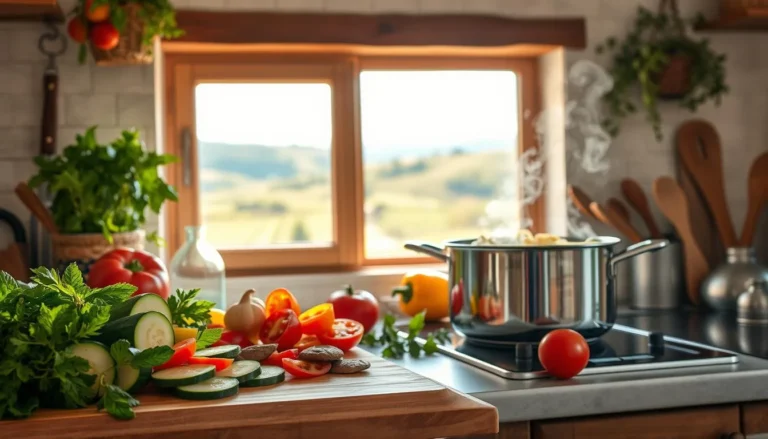
Imagine a sunny kitchen in Valencia, filled with the smells of saffron and roasted veggies. My grandmother Elena would spend hours making magic happen with simple ingredients. She turned them into amazing Spanish vegetarian dishes that told stories of tradition and taste.
Her love for Spanish vegetarian recipes wasn’t just about cooking. It was about keeping alive a culinary tradition that celebrates fresh, lively ingredients.
Spanish vegetarian recipes are more than just food. They are a rich mix of Mediterranean flavors, regional differences, and centuries of cooking innovation. From Barcelona’s busy markets to Andalusia’s quiet kitchens, these dishes show the true spirit of Spanish food without meat.
Whether you’re an experienced cook or just starting out, exploring Spanish vegetarian cooking opens up a world of tasty options. You’ll see how simple ingredients can become incredible meals that excite your taste buds and connect you to Spain’s rich food heritage.
Key Takeaways
- Spanish vegetarian recipes offer incredible flavor diversity
- Mediterranean ingredients are central to authentic meatless dishes
- Traditional cooking techniques make vegetarian meals vibrant
- Regional variations add depth to Spanish plant-based cuisine
- Vegetarian Spanish dishes are both nutritious and delicious
Introduction to Spanish Vegetarian Cuisine: A Mediterranean Journey
Spanish cuisine is a colorful mix of flavors that celebrates plant-based cooking. Mediterranean vegetarian meals are at the heart of Spanish food traditions. They combine fresh ingredients, rich culture, and health benefits.
Exploring plant-based Spanish cuisine shows a world of flavors beyond just vegetables. The Mediterranean diet is famous for its health perks and tasty meatless dishes.
Origins of Spanish Plant-Based Cooking
Spanish vegetarian cuisine has deep roots, influenced by many cultures. Ancient farming and regional differences shaped its unique plant-based meals:
- Moorish spices and focus on vegetables
- Monastery gardens and vegetable prep
- Agrarian communities and creative recipes
Regional Variations and Influences
Every Spanish region adds its own twist to plant-based dishes. From coast to mountains, local ingredients make each region’s vegetarian cooking special.
| Region | Signature Vegetarian Ingredient | Cooking Technique |
|---|---|---|
| Catalonia | Calcots (Green Onions) | Grilling |
| Andalusia | Gazpacho Vegetables | Cold Preparation |
| Valencia | Artichokes | Roasting |
Health Benefits of Mediterranean Vegetarian Diet
The Mediterranean vegetarian diet is very healthy. Studies show it can:
- Improve heart health
- Boost metabolism
- Lower inflammation
- Help you live longer
“Let food be thy medicine and medicine be thy food” – Ancient wisdom that perfectly describes Spanish vegetarian cuisine.
Essential Spanish Cooking Ingredients and Techniques
Exploring traditional Spanish vegetable dishes starts with knowing the key ingredients. These ingredients are what make Spanish food special. They turn simple items into amazing meals.
At the heart of Spanish cooking are its amazing ingredients. Olive oil is the star, used for cooking and adding flavor. Choose top-notch extra virgin olive oil for the best taste. Paprika and saffron add depth and color to dishes like Spanish potato tortilla.
- Olive Oil: Essential for cooking and flavoring
- Paprika: Adds rich, smoky flavor
- Saffron: Provides golden color and unique taste
- Garlic: Fundamental aromatic ingredient
- Sherry Vinegar: Adds tangy complexity
Cooking techniques are just as important in Spanish cuisine. Learning sofrito – a slow-cooked mix of onions, garlic, and tomatoes – will improve your dishes. Toasting spices before adding them brings out their full flavor, a key part of Spanish cooking.
Pro tip: Always use fresh, high-quality ingredients to capture the true essence of Spanish vegetarian cooking.
Your kitchen should have cast-iron skillets for perfect Spanish potato tortilla, wooden spoons for stirring, and patience. This patience is key to creating the rich, layered flavors that are the hallmark of Spanish vegetable dishes.
Classic Spanish Vegetarian Tapas
Spanish tapas without meat are a joy to eat. They bring the flavors of the Mediterranean to your table. These small dishes are great for sharing and show off Spain’s rich food traditions.
Exploring Spanish tapas opens up a world of tasty, healthy options. Let’s look at three famous vegetarian tapas that will make your cooking shine and wow your guests.
Patatas Bravas: Spicy Potatoes
Patatas bravas are a must-try Spanish tapa. They are crispy potatoes in a spicy tomato sauce. Here’s how to make them:
- Cut potatoes into bite-sized cubes
- Deep fry until golden and crispy
- Create a zesty tomato sauce with paprika and chili
- Drizzle sauce over hot potatoes
Tortilla de Patatas: Spanish Potato Omelette
This dish turns simple ingredients into a work of art. To make tortilla de patatas, you’ll need:
- Eggs
- Potatoes
- Onions
- Olive oil
Gazpacho: Cold Tomato Soup
Gazpacho is perfect for hot days. It’s a cool, veggie-packed soup.
| Tapa | Preparation Time | Calories |
|---|---|---|
| Patatas Bravas | 30 minutes | 250 calories |
| Tortilla de Patatas | 45 minutes | 300 calories |
| Gazpacho | 15 minutes | 120 calories |
These vegetarian tapas are not only tasty but also fit well with a vegetarian paella. Each dish brings a unique taste of Spain, showing that plant-based food can be both exciting and true to tradition.
Vegetable Paella: A Colorful Main Course
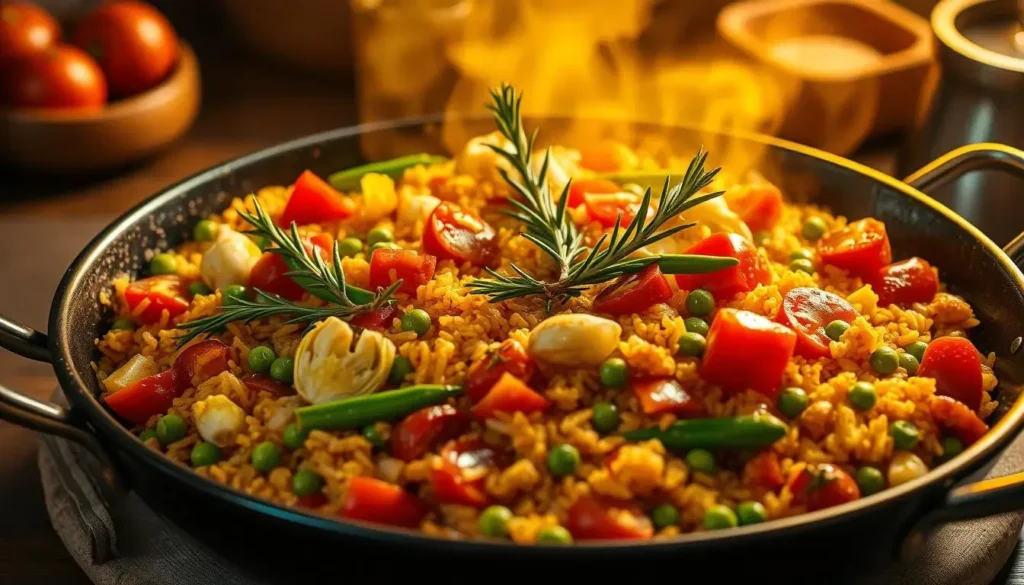
Explore the vibrant world of plant-based Spanish cuisine with a vegetarian paella recipe. This dish brings Spain’s flavors to your kitchen. It turns simple ingredients into a spectacular meal, celebrating Mediterranean culinary traditions.
To make authentic vegetarian paella, you need a few key elements. These make the dish truly special:
- Short-grain rice (preferably Bomba or Calasparra)
- Fresh seasonal vegetables
- High-quality saffron
- Extra virgin olive oil
Your vegetarian paella starts with a flavorful sofrito base. Sauté onions, garlic, and tomatoes until they create a rich, fragrant foundation. The secret to authentic paella is building layers of flavor and texture.
| Ingredient | Quantity | Purpose |
|---|---|---|
| Bomba Rice | 2 cups | Base of the dish |
| Bell Peppers | 2 mixed colors | Color and flavor |
| Artichoke Hearts | 1 cup | Texture and depth |
| Saffron | 1/2 tsp | Authentic flavor |
The most exciting part of your vegetarian paella is the socarrat. This is the crispy rice bottom prized in Spanish cooking. Cook the rice over medium-high heat during the final minutes, listening for a crackling sound.
This dish is more than a meal. It’s a celebration of vegetables, spices, and tradition. It will take you straight to Spain’s sunny coastlines.
Spanish Vegetarian Recipes for Every Season
Spanish cuisine honors nature’s rhythm with its meatless dishes. You’ll see how Spanish vegetarian recipes change with the seasons. This shows the wide range of plant-based cooking.
Spanish vegetarian cooking is special because it uses fresh, local ingredients. These ingredients make every dish a true taste of Spain all year round.
Spring: Fresh Herb and Vegetable Dishes
Spring brings new life to Spanish vegetarian recipes. Light and fresh herbs and veggies are the stars. They make meals that feel like a new beginning.
- Primavera Salad: A colorful mix of seasonal vegetables
- Fresh herb-infused tortilla with spring greens
- Asparagus and pea dishes with mint garnish
Summer: Light and Refreshing Options
Summer makes Spanish vegetarian dishes cool and refreshing. Recipes are raw, chilled, and simple. They keep you feeling fresh and full of energy.
- Classic gazpacho with ripe tomatoes
- Chilled vegetable salads
- Pepper and cucumber dishes
Fall/Winter: Hearty Comfort Foods
Cooler months mean hearty Spanish vegetarian dishes. These dishes warm you up. They use rich legumes, roasted veggies, and slow-cooked stews.
- Pumpkin and chickpea stew
- Roasted vegetable paella
- Hearty bean and vegetable casseroles
Every season’s recipe follows a simple rule: use simple ingredients, process them little, and focus on flavor. Your kitchen can be a doorway to Spain’s rich vegetarian traditions.
Traditional Meatless Spanish Stews and Soups
Explore the heart of Mediterranean vegetarian meals with Spanish dishes that warm you up. Spanish cuisine has many hearty stews and soups. They show that vegetarian cooking can be both satisfying and tasty.
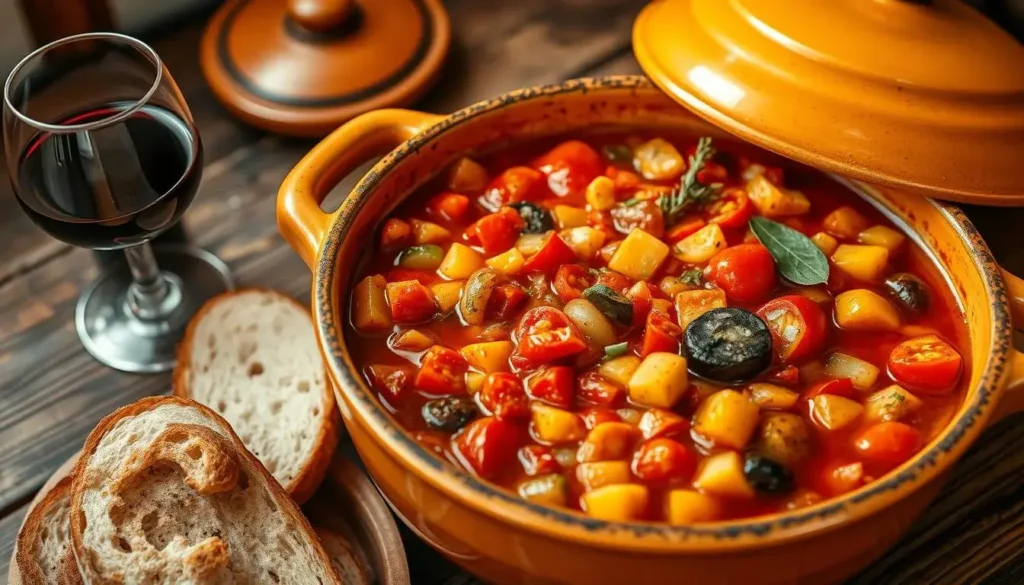
The star of Spanish vegetarian stews is Pisto Manchego, known as the Spanish ratatouille. It comes from La Mancha and highlights the best of Spanish vegetable dishes.
“In every spoonful of Spanish stew, you’ll taste the sunshine of the Mediterranean” – Spanish Culinary Proverb
Key Vegetarian Stews to Explore
- Pisto Manchego: Vegetable medley with tomatoes, peppers, and onions
- Gazpacho: Chilled vegetable soup perfect for summer
- Espinacas con Garbanzos: Spinach and chickpea stew
Nutritional Breakdown of Pisto Manchego
| Nutrient | Amount per Serving |
|---|---|
| Calories | 180 |
| Protein | 6g |
| Carbohydrates | 22g |
| Fat | 8g |
These Mediterranean vegetarian meals are not just tasty but also full of nutrients. You’ll see how simple ingredients can make complex, satisfying flavors. These flavors come from centuries of Spanish culinary tradition.
Spanish Roasted Vegetables and Side Dishes
Spanish vegetarian recipes open a world of vibrant flavors. They show how simple ingredients can become culinary masterpieces. Roasting and frying bring out the rich tastes of Spanish cuisine.
Spanish cooks have mastered vegetable preparation over generations. They turn basic ingredients into dishes that excite the taste buds.
Pimientos del Piquillo: Roasted Red Peppers
Pimientos del Piquillo is the heart of Spanish vegetarian cooking. These sweet red peppers are roasted to enhance their natural flavor. You can enjoy them in many ways:
- Served as a standalone tapa
- Stuffed with creamy goat cheese
- Blended into smooth sauces
- Added to salads for extra flavor
Berenjenas con Miel: Fried Eggplant with Honey
Berenjenas con Miel is a creative dish from Spain. It combines crispy fried eggplant with a honey drizzle. This dish shows the Spanish love for sweet and savory flavors.
| Ingredient | Quantity | Calories |
|---|---|---|
| Eggplant | 1 medium | 35 |
| Honey | 1 tbsp | 64 |
| Olive Oil | 2 tbsp | 240 |
When making these Spanish dishes, technique is crucial. The right cooking method can make simple vegetables into amazing dishes.
The magic of Spanish vegetarian recipes lies in their ability to celebrate vegetables as the star of the meal.
Try these traditional techniques in your kitchen. Discover the rich world of Spanish vegetarian cuisine.
Quick and Easy Spanish Vegetarian Appetizers
Exploring Spanish tapas without meat opens up a world of delicious vegan Spanish food. These bite-sized delights are perfect for entertaining or enjoying a quick snack. They capture the essence of Spanish cuisine.
Discover these mouthwatering vegetarian appetizers that bring the vibrant flavors of Spain to your table:
- Marinated Carrots: A zesty and colorful tapa that’s both simple and impressive
- Spanish Garlic Mushrooms: A rich and aromatic dish that showcases the depth of Spanish flavors
- Olive Bread Swirls: A savory pastry that combines the best of Mediterranean ingredients
- Papas Arrugadas: Crispy wrinkled potatoes with a traditional Spanish twist
Preparing these vegan Spanish food options is easier than you might think. Most can be made in under 30 minutes. They’re ideal for spontaneous gatherings or a quick appetizer spread. The key is to focus on fresh ingredients and bold seasonings that bring out the authentic Spanish taste.
Pro tip for creating the perfect Spanish tapas without meat: Serve your appetizers at room temperature. Pair them with a crisp Spanish white wine or sparkling water with lemon. Presentation is just as important as flavor. Arrange your tapas on a rustic wooden board or colorful ceramic plates to capture the true spirit of Spanish dining.
Bring the taste of Spain home with these simple yet spectacular vegetarian appetizers!
Plant-Based Spanish Sauces and Condiments
Vegan Spanish food is all about vibrant, flavorful sauces. These sauces turn simple dishes into culinary wonders. They add depth and excitement to your meals.
Exploring Spanish sauces opens a world of flavors. It can make your vegetarian and vegan dishes stand out. Each sauce has its own story, blending regional ingredients and cultural traditions.
Romesco Sauce: Catalonia’s Vegetable Delight
Romesco sauce comes from Catalonia and is a highlight of vegan Spanish food. It’s a mix of:
- Roasted red peppers
- Toasted almonds
- Garlic
- Olive oil
- Smoked paprika
Prep Time: 15 minutes | Cook Time: 10 minutes | Servings: 4
Mojo Picón: Canary Islands’ Spicy Sensation
Mojo Picón is a key part of plant-based Spanish cuisine. It adds heat and flavor to any dish. It’s great with papas arrugadas (wrinkled potatoes) and adds spice to veggie plates.
- Red peppers
- Garlic
- Cumin
- Olive oil
- Vinegar
Prep Time: 10 minutes | No cooking required | Servings: 6
Alioli: Garlic Lovers’ Dream
A vegan version of the classic Spanish garlic sauce, Alioli is a creamy delight. It uses aquafaba or plant-based mayo for an authentic taste.
- Garlic
- Plant-based mayo
- Lemon juice
- Olive oil
Prep Time: 5 minutes | No cooking required | Servings: 4
These sauces show the amazing flavors of vegan Spanish food. With just a few ingredients, you can take your taste buds on a journey through Spain.
Tips for Authentic Spanish Vegetarian Cooking
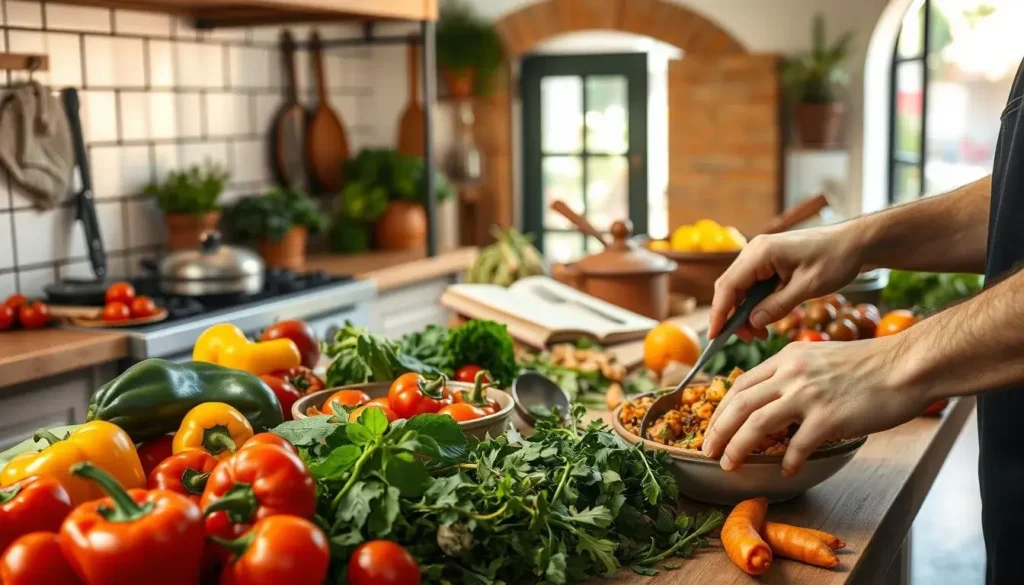
Mastering authentic Spanish vegetarian recipes is more than just following a cookbook. It’s about understanding traditional cooking techniques and choosing the right ingredients. Your journey into Spanish meatless dishes starts with embracing the unique flavors of Mediterranean cuisine.
Here are some essential tips for cooking authentic Spanish vegetarian dishes:
- Use high-quality extra virgin olive oil from Spain
- Invest in a traditional paellera (paella pan) for genuine results
- Learn regional cooking variations across different Spanish provinces
- Select fresh, seasonal vegetables for maximum flavor
Cooking techniques are key to creating genuine Spanish vegetarian recipes. For example, when making paella, never stir the rice after adding stock. Listen for the crackling sound in the final minutes. This sound means the socarrat, the crispy bottom layer, is forming. It’s what makes a dish truly authentic.
| Ingredient | Nutrition per 100g | Key Benefits |
|---|---|---|
| Spanish Olive Oil | 884 calories | Heart-healthy monounsaturated fats |
| Pimientos | 31 calories | Rich in Vitamin C and antioxidants |
| Tomatoes | 18 calories | Lycopene and potassium source |
Seasoning is an art in authentic Spanish meatless dishes. Try traditional spices like smoked paprika, saffron, and garlic to make your vegetarian Spanish recipes stand out. The goal is to make dishes that are both delicious and true to their cultural roots.
Conclusion
Your journey through Mediterranean vegetarian meals shows the rich variety of Spanish vegetarian recipes. These dishes are more than just plant-based food. They turn fresh ingredients into amazing meals full of flavor and health benefits.
Exploring these traditional Spanish recipes opens up a world of tasty options. They celebrate fresh produce, bold spices, and old cooking methods. Each dish brings the Mediterranean diet’s health perks, making meals both delicious and nutritious.
Real Spanish cooking is about more than just food—it’s about making connections. Each recipe encourages you to slow down, enjoy meals with family, and value the spirit of Spanish dining. Paella is best enjoyed with lively talk and shared happiness.
Your cooking journey doesn’t stop here. Keep trying out these Spanish vegetarian recipes, making them your own while keeping their traditional essence. Dive into the flavors, techniques, and love that make Spanish food a true celebration of plant-based cooking.
FAQ
What are the key ingredients in Spanish vegetarian cuisine?
Is Spanish cuisine vegetarian-friendly?
How can I make authentic Spanish dishes vegetarian?
What are some popular Spanish vegetarian tapas?
Is a Spanish vegetarian diet healthy?
How can I achieve authentic Spanish flavors in vegetarian cooking?
Are there seasonal variations in Spanish vegetarian cuisine?
What are some traditional Spanish vegetarian stews?
Rate & Reviews
5.0 (6 reviews)
Did you enjoy these traditional Spanish vegetarian recipes?
⭐ Rate this recipe collection and share your experience with us!
Leave a Review
Your Rating: ⭐⭐⭐⭐⭐
Name:
Email (optional):
Comment:
Submit Review
Reviews
Maria ⭐⭐⭐⭐⭐
“These Spanish vegetarian recipes are delicious, simple, and full of traditional flavor. I loved them!”
Sofia ⭐⭐⭐⭐⭐
“Wonderful collection! The recipes are easy to follow and perfect for a family meal.”
Elena ⭐⭐⭐⭐⭐
“I really enjoyed these traditional Spanish flavors. I’ll definitely make them again!”
Enjoyed This Recipe Collection?
❤️ Like it if you enjoyed these recipes.
💬 Leave a comment and tell us which Spanish dish was your favorite.
📤 Share it with your friends and family who love Spanish food!
Your support helps us create more delicious and easy recipes for you. ❤️