Healthy Egyptian Vegetarian Recipes Made Easy
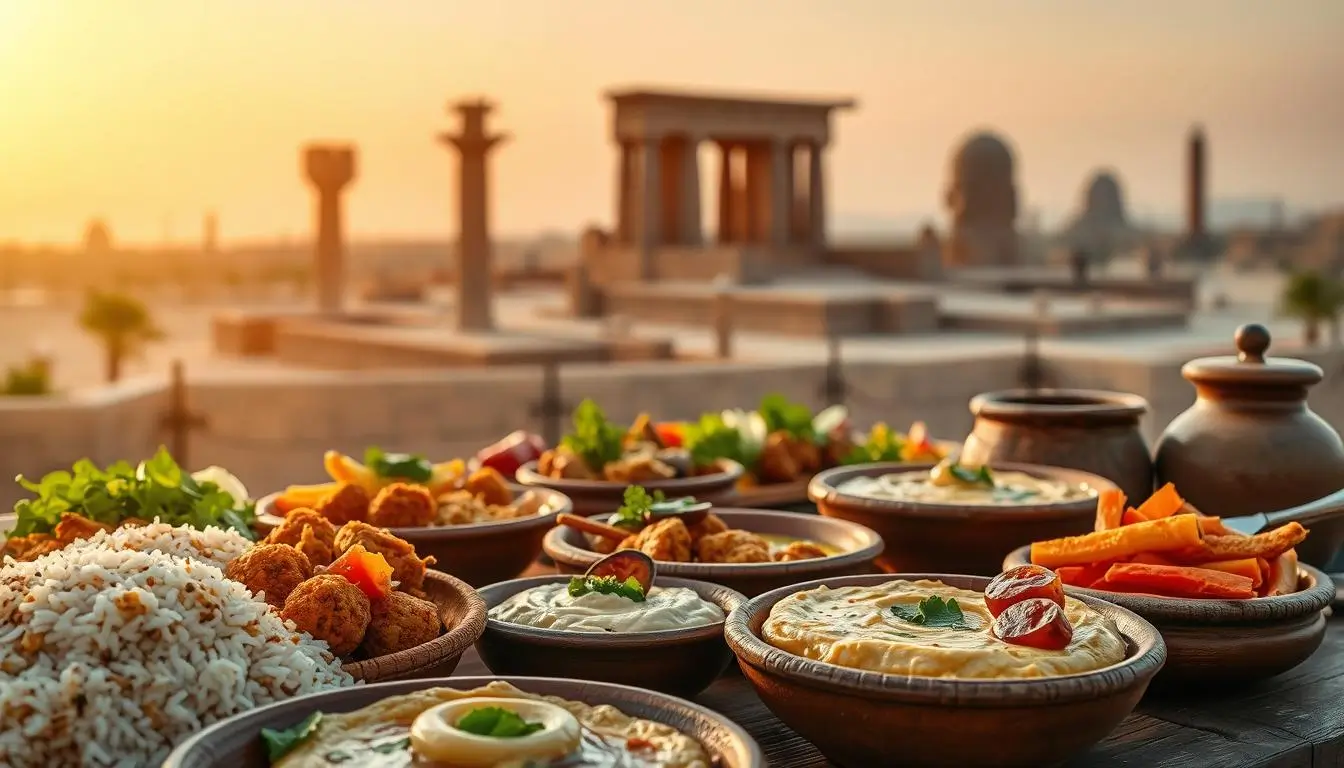
Growing up in Cairo, I saw my grandmother turn simple veggies into magic. Her hands moved quickly, chopping, seasoning, and stirring. She made Egyptian vegetarian recipes that had been passed down for generations. These memories sparked my love for vegan Egyptian cuisine.
Egyptian food is a story of cultural strength and creativity. Vegetarian dishes have been key in Egyptian cooking for centuries. Each recipe tells a tale of ancient times, mixing spices, legumes, and fresh produce into nourishing meals.
This guide will take you on a tasty trip through Egypt’s plant-based food world. You’ll learn to make authentic Egyptian vegetarian recipes. These are not just meals, but experiences that connect you to thousands of years of cooking wisdom.
Key Takeaways
- Egyptian cuisine offers a rich variety of vegetarian options
- Traditional recipes use simple, nutritious ingredients
- Cooking techniques preserve authentic flavors
- Vegetarian dishes reflect cultural heritage
- Healthy eating can be delicious and exciting
Understanding Traditional Egyptian Vegetarian Cuisine
Egyptian vegetarian cuisine is a rich tradition that goes back centuries. It shows the amazing variety of plant-based food in the Middle East. Traditional dishes have evolved from ancient farming practices.
The history of Egyptian vegetarian cooking is long. Legumes and vegetables were key in their diet. Ancient Egyptians used advanced cooking methods to make tasty, healthy meals from simple ingredients.
Historical Origins of Egyptian Plant-Based Dishes
Plant-based diets in Egypt have a deep history. During fasting periods, like in Coptic Christian traditions, vegetarian meals were crucial. Important historical times showed the value of vegetarian cooking:
- 13th-century cooking focused on legume dishes
- More vegetables were grown thanks to farming innovations
- Religious times encouraged eating without meat
Cultural Significance of Vegetarian Meals
Vegetarian meals in Egyptian culture mean more than just food. They stand for community, health, and spiritual bond. Families come together for meals filled with colorful, nutritious dishes that celebrate the harvest.
Common Ingredients in Egyptian Meat-Free Cooking
Traditional Egyptian dishes rely on a few key ingredients. These ingredients add great flavor and nutrition:
| Ingredient | Nutritional Value | Common Dishes |
|---|---|---|
| Fava Beans | High Protein | Ful Medames |
| Lentils | Rich in Fiber | Koshari |
| Eggplant | Low Calories | Mahshi |
Learning about these traditions shows the richness and complexity of Egyptian plant-based food. Each ingredient has a story of cultural strength and nutritional knowledge passed down through generations.
Essential Kitchen Tools and Ingredients
Starting to make authentic vegetarian Egyptian meals means having the right tools and ingredients. You’ll need a few key items to turn simple ingredients into tasty traditional dishes.
Here are the essential kitchen tools for making Egyptian vegetarian recipes:
- Large non-stick skillet
- Heavy-bottomed pot for stews
- Sharp chef’s knife
- Cutting board
- Colander for washing vegetables
Staple ingredients are the heart of authentic vegetarian Egyptian meals. Make sure your pantry has these basic items:
- Fava beans (primary protein source)
- Long-grain rice
- Fresh vegetables like tomatoes, eggplant, and zucchini
- Herbs such as parsley, cilantro, and mint
- Spices: cumin, coriander, and paprika
Nutrition is important in Egyptian vegetarian cooking. A typical serving of traditional vegetarian dishes has about:
| Nutrient | Average per Serving |
|---|---|
| Calories | 250-350 |
| Protein | 12-15g |
| Carbohydrates | 35-45g |
| Fat | 8-12g |
With these tools and ingredients, you’re set to dive into the rich world of Egyptian vegetarian recipes in your own kitchen.
Koshari: Egypt’s National Vegetarian Dish
Koshari is Egypt’s favorite vegan dish, loved by all. It’s a mix of rice, lentils, pasta, and tomato sauce. This combo makes a filling meal that everyone enjoys.
This dish is more than food; it’s a cultural treasure. It brings together different ingredients in a perfect way.
Preparation Guide for Authentic Koshari
To make great koshari, follow these steps:
- Prepare rice and lentils separately
- Cook short pasta until al dente
- Create a rich tomato sauce
- Layer ingredients carefully
- Top with crispy fried onions
Delicious Customization Options
You can make your koshari your own with these ideas:
- Spice level: Add more hot sauce
- Add chickpeas for extra protein
- Try different pasta types
- Include roasted vegetables
Serving and Storage Recommendations
Serve koshari hot for the best taste. Keep leftovers in a sealed container in the fridge for 3 days.
| Nutritional Information | Amount per Serving |
|---|---|
| Calories | 450 |
| Protein | 15g |
| Carbohydrates | 70g |
| Fat | 12g |
Try this traditional koshari recipe and enjoy Egypt’s flavors at home!
Mahshi: Stuffed Vegetables the Egyptian Way
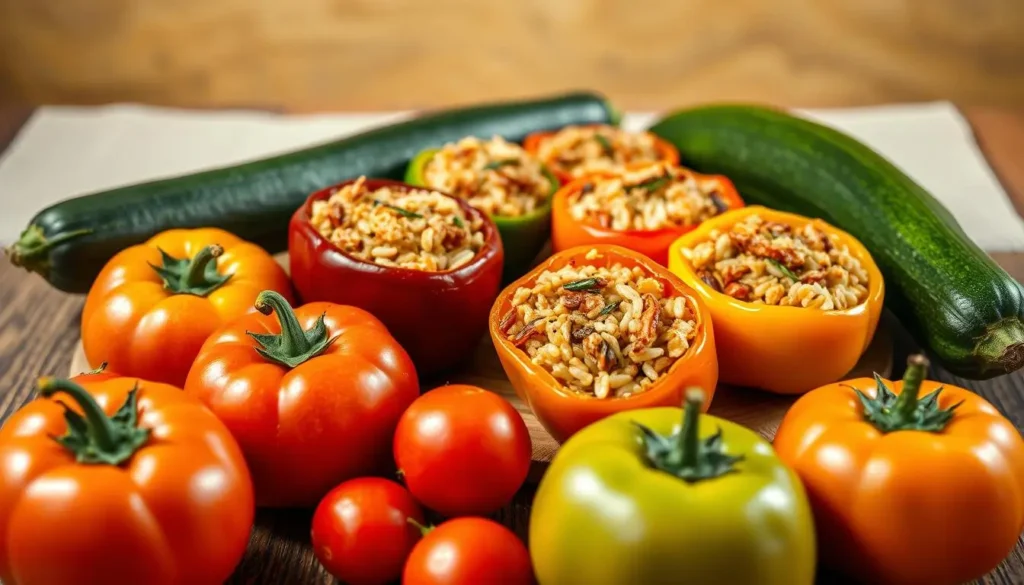
Mahshi is a key dish in traditional Egyptian vegetarian cooking. It turns simple veggies into tasty masterpieces. These stuffed treats mix flavors and textures in a way that excites your taste buds.
Egyptian cooks are experts at stuffing veggies with a mix of rice, herbs, and spices. They often use:
- Zucchini
- Grape leaves
- Eggplant
- Bell peppers
- Cabbage leaves
Making mahshi takes time and skill. Each veggie is carefully prepared and filled with a tasty rice mix. This mix usually includes:
- Short-grain rice
- Fresh parsley
- Diced onions
- Tomato paste
- Aromatic spices
| Preparation Detail | Time |
|---|---|
| Prep Time | 45 minutes |
| Cook Time | 60 minutes |
| Total Time | 1 hour 45 minutes |
| Servings | 4-6 people |
“Mahshi is not just a dish, it’s a celebration of Egyptian culinary tradition and vegetarian creativity.” – Egyptian Food Historian
To make mahshi, roll each veggie tightly and cook them gently. This lets the flavors blend well. These dishes are usually served warm and can be a main course or side.
Pro tip: Serve your mahshi with yogurt or a fresh salad for a complete meal.
Egyptian Vegetarian Recipes: From Street Food to Home Cooking
Egyptian cuisine is a world of authentic vegetarian meals. It shows the rich traditions of plant-based Middle Eastern food. These recipes tell stories of flavor, nutrition, and cultural heritage, from street corners to family kitchens.
Exploring Egyptian vegetarian meals reveals a diverse and vibrant food landscape. It goes beyond simple ingredients. The cuisine turns humble vegetables and legumes into extraordinary dishes that satisfy both hunger and curiosity.
Popular Street Food Options
Egyptian street food is at the heart of plant-based Middle Eastern food culture. These quick, delicious options show the nation’s culinary creativity:
- Ta’meya (Egyptian Falafel): Crispy chickpea fritters
- Koshari: A layered street food favorite
- Feteer Meshaltet: Flaky savory pastry
- Tamiya sandwiches: Quick and portable meals
Traditional Family Recipes
Family kitchens keep generations of cooking wisdom alive. They turn simple ingredients into remarkable vegetarian dishes. These recipes connect people through shared culinary experiences:
- Mahshi: Stuffed vegetable dishes
- Molokhia: Nutritious green soup
- Ful Medames: Seasoned fava bean preparation
- Shakshuka: Egg and vegetable skillet
Modern Adaptations
Contemporary Egyptian chefs are reimagining traditional recipes. They create innovative plant-based interpretations. These dishes respect historical cooking methods while appealing to modern tastes.
| Traditional Dish | Modern Adaptation |
|---|---|
| Koshari | Quinoa-based version |
| Mahshi | Vegan stuffed vegetables |
| Molokhia | Gluten-free green soup |
These culinary innovations show the flexibility and creativity in Egyptian vegetarian meals. They invite food lovers to explore a rich and evolving gastronomic tradition.
Falafel (Ta’meya): The Egyptian Version
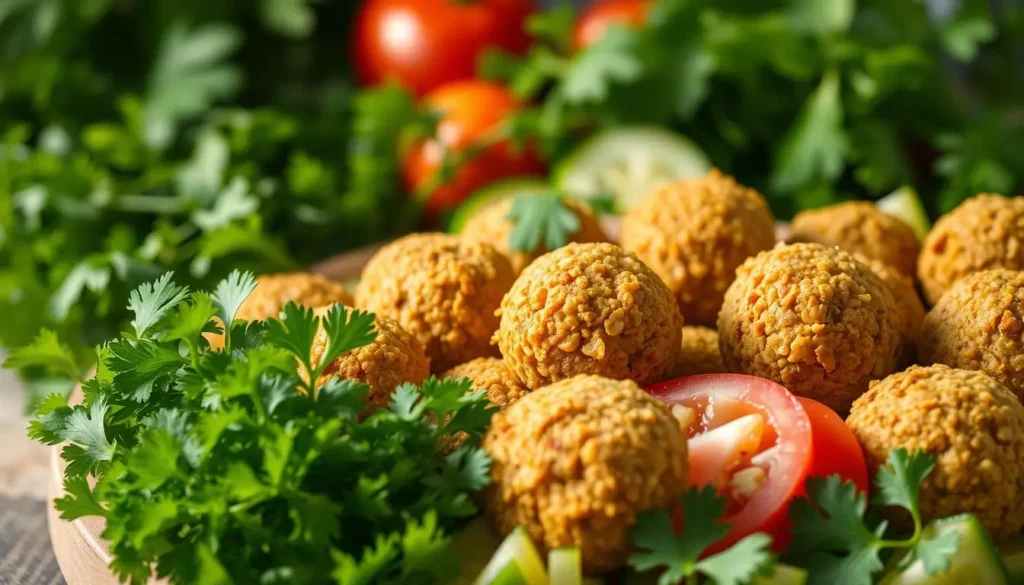
Explore the authentic Egyptian falafel, called ta’meya. It’s a vegan favorite that stands out with fava beans instead of chickpeas. This makes it a unique and tasty street food.
Egyptian falafel has a special taste that’s different from others. The fava beans make it creamy and green, unlike chickpea falafel.
- Key ingredients for authentic falafel Egyptian style:
- Fresh fava beans
- Fresh parsley
- Cilantro
- Onions
- Garlic
- Cumin
To make ta’meya, use traditional methods for the best results. You’ll grind fava beans, mix with herbs and spices, and then fry until golden.
| Nutritional Facts (Per Serving) | Amount |
|---|---|
| Calories | 180 |
| Protein | 8g |
| Carbohydrates | 22g |
| Fat | 7g |
Making your own vegan Egyptian dish is not only tasty but also healthy. Enjoy it with tahini sauce, fresh veggies, and warm pita for a full meal.
Hearty Egyptian Lentil Soups and Stews
Egyptian cuisine is known for its warm, nutritious lentil soups. These dishes have been a staple for families for many years. They are more than just food; they are a journey through Egypt’s rich flavors.
Lentil soups are a key part of Egyptian vegetarian cooking. They are packed with protein and are a great choice for those who love plant-based meals. Each region in Egypt has its own version of lentil soup, showcasing their unique flavors.
Regional Flavor Profiles
Every region in Egypt adds its own twist to lentil soups:
- Upper Egypt: Spicier versions with extra cumin and chili
- Lower Egypt: Milder, creamier soups with more herbs
- Coastal regions: Soups with a hint of seafood flavors
Seasonal Adaptations
Egyptian lentil soups change with the seasons. They offer warmth in winter and lightness in summer.
| Season | Soup Characteristics |
|---|---|
| Winter | Thick, hearty soups with extra spices |
| Summer | Lighter, broth-based soups |
| Autumn | Balanced soups with roasted vegetables |
Nutritional Powerhouse
These traditional dishes are not only tasty but also very healthy. Lentils are a great source of protein, fiber, and minerals.
- High in protein
- Rich in dietary fiber
- Excellent source of iron
- Low in calories
Looking for a comforting meal or a healthy option? Egyptian lentil soups are perfect for everyone.
Vegetarian Dips and Spreads
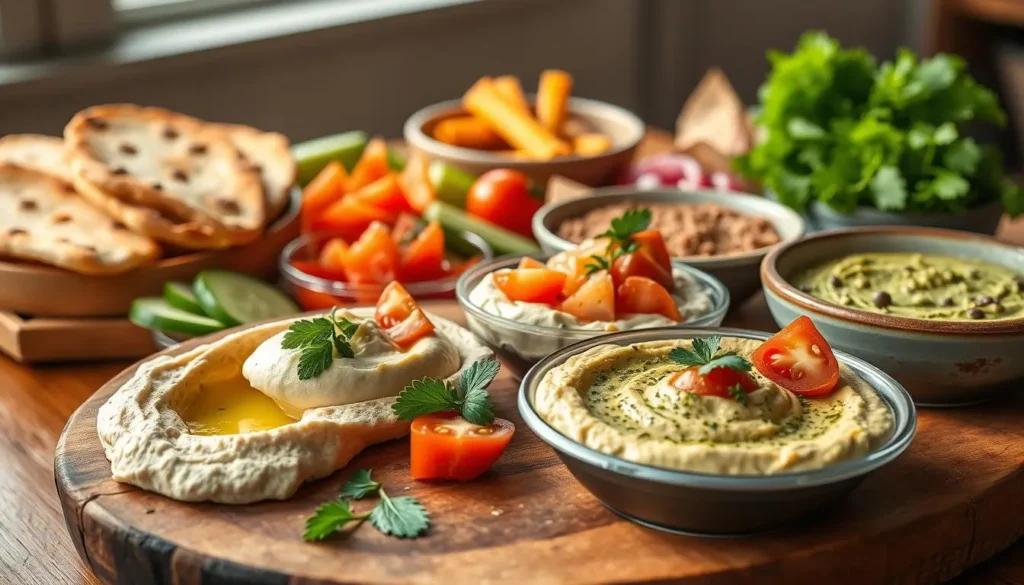
Egyptian plant-based Middle Eastern food is known for its amazing vegetarian dips and spreads. These dishes turn simple ingredients into works of art. They delight our taste buds and show off the deep flavors of Egyptian cooking.
Let’s look at some of the most loved vegetarian dips in Egypt:
- Baba Ganoush: A smoky eggplant dip with roasted veggies and tahini
- Classic Hummus: A chickpea spread with olive oil and spices
- Tahini sauce: A versatile sauce made from ground sesame seeds
- Muhammara: A red pepper and walnut spread with rich flavors
When making these dips, use fresh ingredients and traditional methods. Tahini vegetables add depth and richness. Each spread has its own mix of textures and tastes, showing Egypt’s rich food heritage.
These dips take 10-30 minutes to make, great for quick snacks or mezze platters. You can also make them your own by adding herbs or changing the spice levels.
“In Egyptian cuisine, dips are not just condiments—they’re a celebration of plant-based ingredients and culinary creativity.”
Egyptian Bread and Rice-Based Dishes
Egyptian vegetarian recipes are not complete without bread and rice dishes. These are the heart of authentic Egyptian meals. They offer nutrition and amazing flavor.
Rice and bread are key in Egyptian vegetarian cooking. They turn simple ingredients into hearty meals. These meals have fed families along the Nile Valley for generations.
Essential Cooking Techniques
Learning to cook Egyptian rice and bread is important. It makes these basic ingredients special:
- Perfectly steam rice with minimal water
- Use traditional clay pots for authentic flavor
- Create crispy bread edges while maintaining soft centers
- Season rice with aromatic spices
Traditional Serving Methods
Serving Egyptian vegetarian recipes is more than just food. It’s about creating a complete experience. This experience honors cultural traditions.
| Dish | Serving Recommendation | Typical Accompaniments |
|---|---|---|
| Egyptian Rice | Fluffy and separately grained | Tomato sauce, herbs |
| Aish Baladi (Bread) | Warm and slightly crisp | Hummus, vegetable spreads |
| Kushari Rice Base | Mixed with lentils and pasta | Spicy tomato sauce |
When making authentic Egyptian vegetarian meals, remember presentation and technique matter. Each dish shares a story of cultural heritage and culinary skill.
Seasonal Egyptian Vegetable Recipes
Egyptian vegetarian recipes celebrate the vibrant produce each season brings. Plant-based Middle Eastern food changes with the seasons. It offers delicious meals that highlight local ingredients.
Summer brings a wealth of fresh options for Egyptian vegetarian recipes. Your kitchen can come alive with dishes featuring:
- Ripe tomatoes for salata baladi (traditional tomato salad)
- Crisp cucumbers in refreshing mezze
- Grilled zucchini with aromatic herbs
Winter brings hearty plant-based Middle Eastern food that warms the soul. Root vegetables take center stage in robust dishes like:
- Roasted butternut squash with cumin
- Stuffed cabbage rolls
- Lentil and carrot stews
“Cooking with seasonal vegetables is not just a meal, it’s a celebration of nature’s rhythm.” – Egyptian Chef Mohammed Ramadan
Nutritional values vary, but most seasonal vegetable dishes offer incredible health benefits:
| Dish | Calories | Protein | Carbs | Fat |
|---|---|---|---|---|
| Tomato Salad | 75 | 2g | 15g | 3g |
| Roasted Squash | 120 | 3g | 22g | 5g |
By embracing seasonal cooking, you’ll discover the true magic of Egyptian vegetarian recipes. They connect you directly to local agricultural traditions.
Health Benefits and Nutritional Information
Vegan Egyptian cuisine is a great way to eat well. It combines the best of meatless Mediterranean cooking with health benefits. Starting a plant-based diet can change your eating habits for the better.
Looking into Egyptian vegetarian dishes shows a wealth of healthy ingredients. These meals are tasty and full of nutrients that boost your health.
Protein Sources in Egyptian Vegetarian Dishes
Egyptian vegetarian food is rich in protein from plants. Key sources include:
- Lentils
- Chickpeas
- Fava beans
- Nuts and seeds
- Whole grains
Balanced Meal Planning Strategies
To make complete vegan Egyptian meals, plan carefully. Your meals should have protein, carbs, and fats.
| Nutrient Category | Recommended Daily Intake | Egyptian Vegetarian Sources |
|---|---|---|
| Protein | 0.8g per kg body weight | Fava beans, chickpeas |
| Iron | 8-18 mg | Lentils, spinach |
| Calcium | 1000-1200 mg | Tahini, leafy greens |
By using Mediterranean cooking methods, you can make healthy, balanced meals. These meals support your health goals and let you explore Egypt’s rich food traditions.
Conclusion
Egyptian vegetarian recipes take you on a journey through centuries of food traditions. You’ve seen how simple plant-based ingredients can become amazing meals. From street food like ta’meya to hearty lentil stews, these dishes offer a nutritious and satisfying dining experience.
These recipes connect you with Egypt’s vibrant culinary heritage. They celebrate fresh vegetables, legumes, and spices. Whether you’re an experienced cook or just starting, there’s something for everyone.
Your kitchen can become a Mediterranean haven, bringing Egyptian cooking to your table. By trying these recipes, you’ll grow your cooking skills and enjoy a healthy, delicious way of eating. This approach has been loved for generations.
Begin your culinary journey today. Try these authentic Egyptian vegetarian meals and let Egypt’s flavors change your cooking. Each recipe is a chance to explore a rich cultural tradition that inspires food lovers everywhere.
Rate & Reviews
⭐ Which Egyptian vegetarian recipe did you enjoy most?
Tried one of these recipes? Leave a rating and share your experience in the comments! Tell us which dish you prepared and what you loved most about its flavor and simplicity.
🌿 Did you add your own Egyptian touch?
Share the herbs, spices, vegetables, or ingredients you used to personalize the dish. Your ideas could inspire other readers to explore more delicious vegetarian meals.
❤️ Found a recipe you’d make again?
Share this collection with friends and family who enjoy wholesome, flavorful, and easy vegetarian food.
🍽️ What Egyptian recipe should we feature next?
Have a favorite vegetarian dish such as koshari, ful, molokhia, or another Egyptian classic? Leave your suggestion in the comments and tell us what you’d love to see next!