Perfect Roast Beef Recipe – Tender, Juicy, and Easy to Make
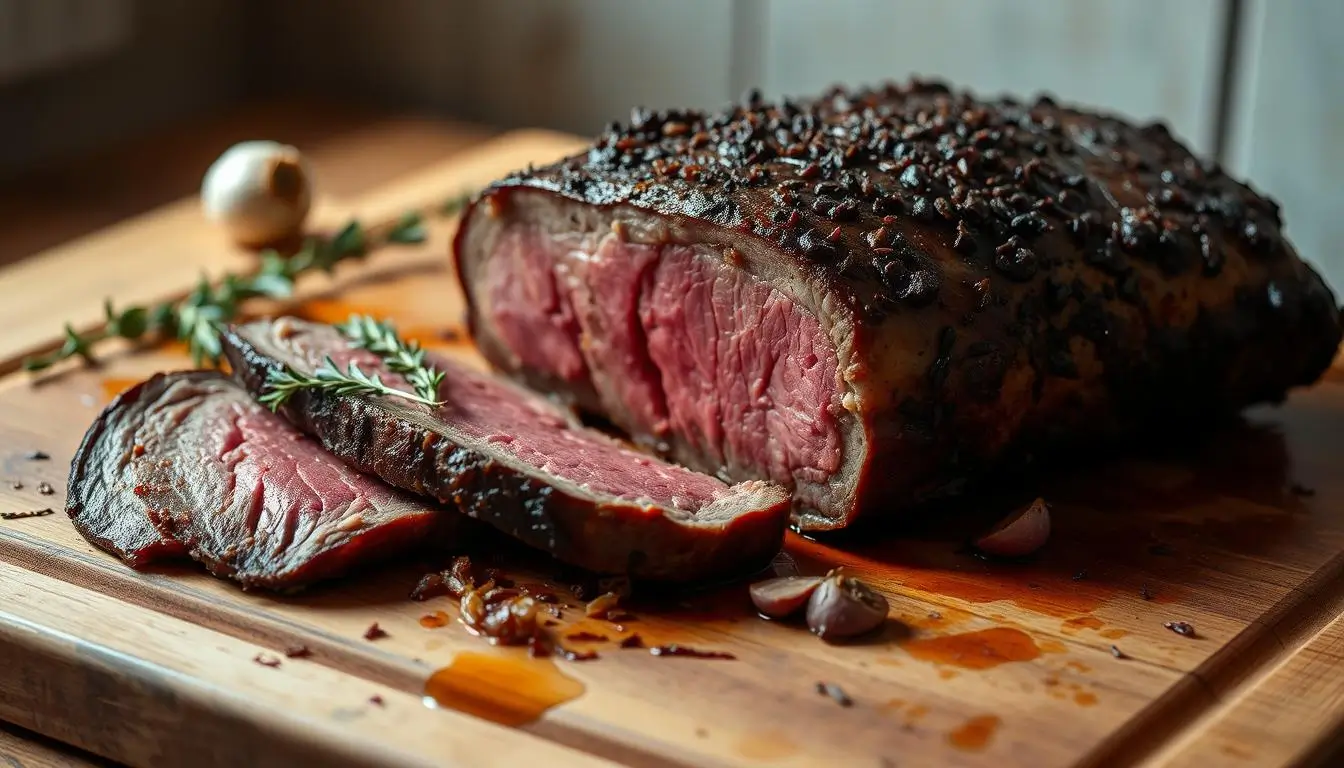
Growing up, Sunday dinners at my grandma’s house were special. The smell of roast beef filled the kitchen, making everyone excited. Now, I’m excited to share a classic roast beef recipe that’s tender and juicy, and easy to make.
This roast beef recipe is perfect for family gatherings or impressing dinner guests. You’ll learn how to choose the right cut and control the temperature. This way, you’ll make a delicious classic roast beef every time.
Key Takeaways
- Learn a foolproof method for creating tender, juicy roast beef
- Discover professional techniques for perfect meat preparation
- Master temperature control for ideal doneness
- Unlock simple flavor enhancement strategies
- Gain confidence in preparing restaurant-quality roast beef at home
Why This Classic Roast Beef Recipe Works
Mastering prime rib cooking is all about the science behind a perfect roast. It’s not just about throwing meat in the oven. It’s about precision, technique, and turning ordinary meat into a spectacular meal.
The secret to an incredible roast is in three key elements. These elements take your cooking from basic to extraordinary:
Traditional Cooking Method
The traditional way to roast beef involves a special temperature technique. Your cooking method should focus on:
- Starting with a high-temperature sear
- Reducing heat for slow, even cooking
- Creating a crispy exterior while maintaining a tender interior
Perfect Temperature Control
Temperature control is crucial for a successful roast. You’ll need a reliable meat thermometer to track the roast’s internal temperature. Different levels of doneness need specific temperature ranges:
- Rare: 125°F
- Medium-rare: 135°F
- Medium: 145°F
Flavor Enhancement Techniques
To turn a good roast into an exceptional one, focus on flavor enhancement. Consider these techniques:
- Use robust herb rubs
- Allow meat to reach room temperature before cooking
- Season generously with kosher salt and fresh cracked pepper
Professional chefs know that patience and precision are the keys to a perfect roast beef.
Essential Ingredients for Success
Creating the perfect holiday roast beef starts with choosing high-quality ingredients. These ingredients make your oven roasted beef go from good to great. Your garlic herb roast will be unforgettable with the right fresh, premium parts.
The key to a great roast beef recipe is these essential ingredients:
- Premium Beef Cut: Pick a cut with great marbling
- Extra Virgin Olive Oil: Creates a perfect golden crust
- Fresh Garlic: Adds depth and aromatic flavor
- Fresh Herbs: Thyme and rosemary for authentic herb notes
- Kosher Salt: Enhances natural beef flavors
- Freshly Ground Black Pepper: Adds subtle heat and complexity
When making your holiday roast beef, the quality of ingredients is crucial. Fresh herbs make a huge difference in flavor. Choose herbs that are vibrant and have a strong smell for the best taste.
Pro tip: Always use fresh ingredients for the most authentic and delicious garlic herb roast experience.
Your choice of ingredients can make or break your roast beef. Spend on the best quality you can, and you’ll get a dish that wows everyone.
Best Cuts of Beef for Roasting
Choosing the right cut of beef is key to a tasty roast. Different cuts have unique flavors and textures. They also cook differently, affecting your roast’s quality.
When picking beef for roasting, consider popular options. They offer great taste and tenderness. The best cut depends on your taste, budget, and cooking style.
Top Round Roast
The top round roast is great for those watching their budget. It’s lean and comes from the cow’s rear leg. It’s perfect for slow cooking, making it tender.
- Lean and economical
- Best for slow roasting
- Ideal for slicing thin
Sirloin Tip Roast
The sirloin tip roast is versatile and tasty. It’s near the hip bone and has a good balance of flavor and tenderness. It’s a great alternative to prime rib.
- Moderate fat content
- Flavorful and tender
- Great for medium-rare preparation
Prime Rib
Prime rib is the top choice for roasting. It’s rich in marbling and flavor. It’s perfect for special occasions, offering a luxurious dining experience.
- Highest fat content
- Most tender cut
- Premium roasting choice
Choose your beef cut wisely for a memorable roast. It will impress your dinner guests.
Kitchen Equipment You’ll Need
To make a perfect medium rare beef roast, you need the right tools. The right equipment makes cooking better and ensures tasty results every time.
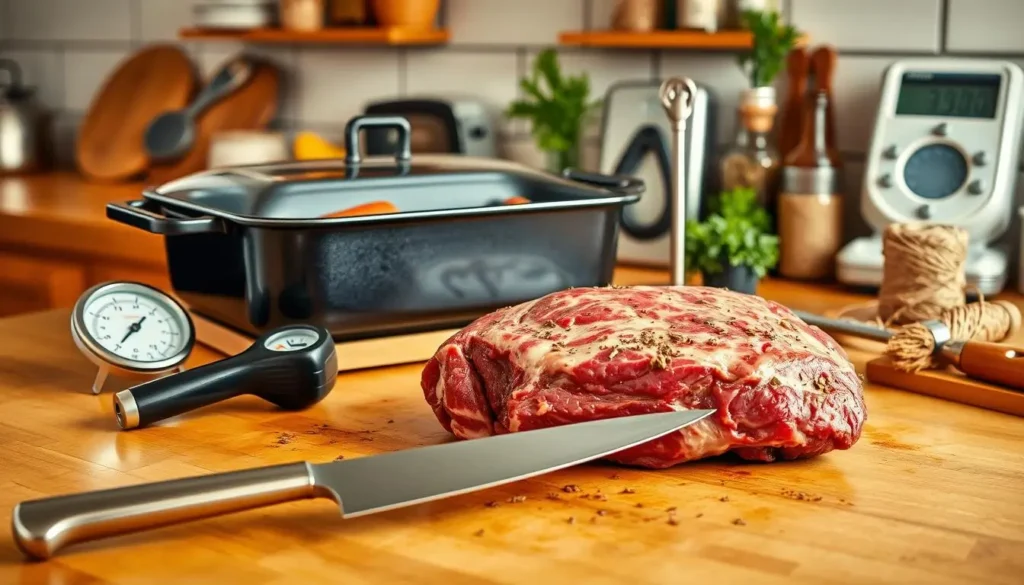
- Roasting Pan: A sturdy, heavy-duty pan that conducts heat evenly
- Meat Thermometer: Critical for achieving perfect medium rare beef
- Sharp Carving Knife
- Kitchen Twine
- Cutting Board
A probe thermometer is a must-have for checking your roast’s temperature. It lets you track the temperature in real-time. This helps you get the perfect doneness every time.
| Equipment | Purpose | Recommended Type |
|---|---|---|
| Roasting Pan | Even heat distribution | Stainless steel or cast iron |
| Meat Thermometer | Temperature monitoring | Digital probe thermometer |
| Carving Knife | Precise meat slicing | 10-inch slicing knife |
If you’re missing some tools, don’t worry. Many can be swapped or worked around. The main thing is knowing how each tool helps make your garlic herb beef roast delicious.
Roast Beef Recipe
Making tender juicy roast beef needs care and love. Start by picking the best ingredients. Then, learn cooking tricks to make it a special meal.
The secret to amazing slow roasted beef with gravy is in the prep and knowing your ingredients.
Herb and Garlic Rub Preparation
A tasty herb and garlic rub can make your roast beef stand out. Here’s a simple yet tasty recipe:
- 4 garlic cloves, minced
- 2 tablespoons fresh rosemary, chopped
- 2 tablespoons fresh thyme
- 3 tablespoons olive oil
- 2 teaspoons kosher salt
- 1 teaspoon black pepper
Temperature Guidelines
Getting the perfect doneness means watching the temperature closely. Use a meat thermometer for the best results:
- Rare: 125°F internal temperature
- Medium Rare: 135°F internal temperature
- Medium: 145°F internal temperature
- Well Done: 160°F internal temperature
Cooking Times
Cooking times depend on the roast’s size and how done you want it. A good rule of thumb is 20-25 minutes per pound at 350°F.
- Nutritional Information (per 3 oz serving):Calories: 180
- Protein: 22g
- Fat: 9g
- Carbohydrates: 0g
Remember, patience and precision are key to making a delicious roast beef. It will wow your family and guests.
Step-by-Step Cooking Instructions
Preparing an easy beef roast needs care and precision. Your oven roasted beef will be perfect with these steps. First, take the roast out of the fridge 1 hour before cooking. This helps it cook evenly.
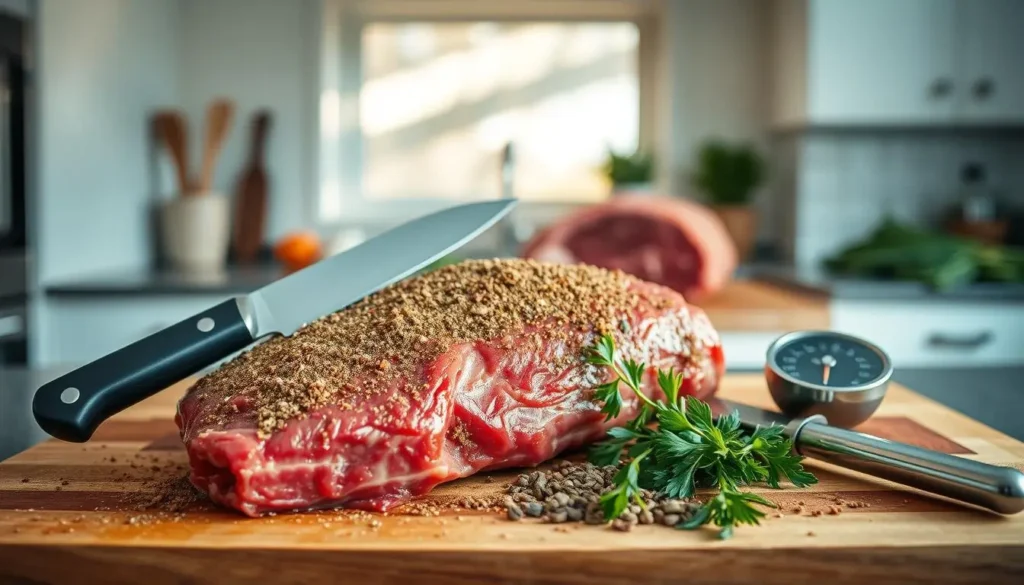
- Preheat your oven to 450°F for initial searing
- Place the roast on a rack in a roasting pan
- Season generously with herb rub
- Sear the roast at high temperature for 15 minutes
- Reduce oven temperature to 325°F
Cooking time varies based on your desired doneness. An instant-read meat thermometer is key for a great holiday beef roast. For medium-rare, aim for an internal temperature of 135°F.
| Doneness | Internal Temperature | Approximate Cooking Time |
|---|---|---|
| Rare | 125°F | 1 hour 30 minutes |
| Medium-Rare | 135°F | 1 hour 45 minutes |
| Medium | 145°F | 2 hours |
Pro tip: Let your roast rest for 15-20 minutes after cooking. This makes it tender and flavorful.
Temperature Guide for Different Doneness Levels
Achieving the perfect medium rare beef needs precision and knowing meat temperatures. Prime rib cooking is an art that depends on careful temperature monitoring for the best results.
Knowing the exact internal temperature is key for a perfectly cooked roast. A meat thermometer is your most important kitchen tool for prime rib cooking.
Doneness Temperature Chart
| Doneness Level | Internal Temperature | Final Temperature After Resting |
|---|---|---|
| Rare | 120-125°F | 125-130°F |
| Medium Rare | 130-135°F | 135-140°F |
| Medium | 140-145°F | 145-150°F |
| Medium Well | 150-155°F | 155-160°F |
| Well Done | 160-165°F | 165-170°F |
Using Your Meat Thermometer
- Insert the thermometer into the thickest part of the roast
- Avoid touching bone or fat for accurate reading
- Remove roast from heat 5-10 degrees before desired final temperature
- Let meat rest to allow carryover cooking
For the perfect medium rare beef, aim to remove your roast when it reaches 130-135°F. The resting period will naturally increase the temperature. This gives you that ideal pink center with maximum flavor and tenderness.
Making the Perfect Gravy
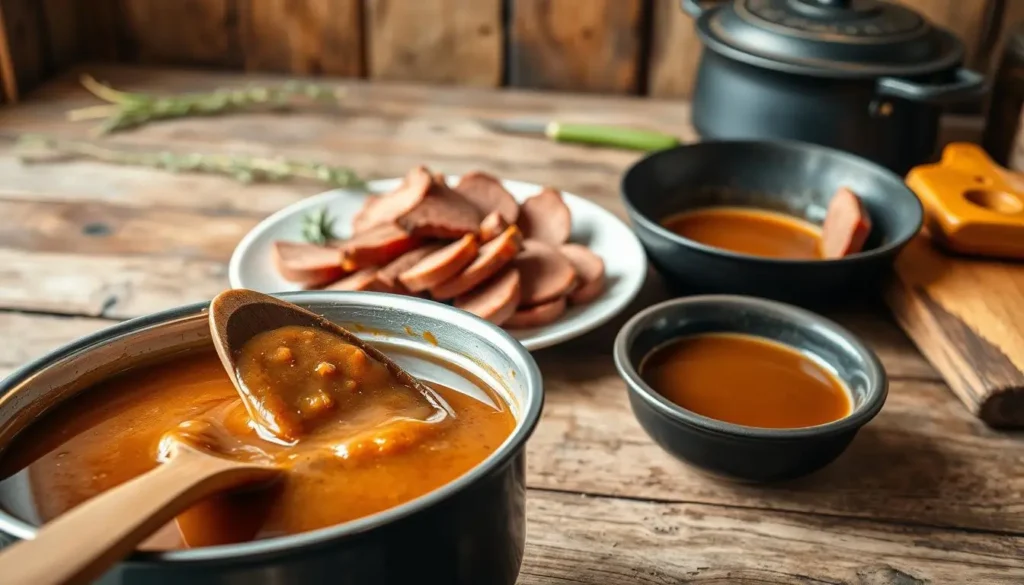
Creating the perfect gravy is the ultimate finishing touch for your classic roast beef. The secret to an exceptional gravy lies in capturing those rich, flavorful drippings from your slow roasted beef with gravy.
Start by collecting the delicious pan drippings from your roasted beef. These golden-brown bits are packed with incredible flavor that will transform your ordinary gravy into something extraordinary.
- Remove the roast from the pan, leaving behind all the delectable brown bits
- Pour off excess fat, keeping the flavorful drippings
- Use a whisk to incorporate flour and create a smooth base
Your gravy-making technique can elevate a good classic roast beef to a memorable meal. The key is to create a smooth, rich sauce without any lumps.
Gravy Enhancement Tips
To boost your gravy’s flavor, consider these professional techniques:
- Add a splash of red wine for depth
- Use beef stock for extra richness
- Incorporate fresh herbs like thyme or rosemary
Pro tip: Strain your gravy for an ultra-smooth texture that will impress even the most discerning dinner guests.
The perfect gravy transforms a good roast into an unforgettable dining experience.
Resting and Carving Techniques
Preparing a tender juicy roast is more than just cooking. The final steps of resting and carving are key. They help your sunday dinner roast reach its best flavor and texture.
After taking your roast out of the oven, patience is crucial. Letting the meat rest allows the juices to spread evenly. This makes your roast more succulent and delicious.
Proper Resting Time
Resting is not optional—it’s essential. Here are some guidelines for the perfect rest:
- Small roasts (2-3 pounds): Rest 10-12 minutes
- Medium roasts (4-5 pounds): Rest 15-20 minutes
- Large roasts (6+ pounds): Rest 20-25 minutes
“A well-rested roast is the difference between good and extraordinary.” – Professional Chef
Mastering Carving Techniques
Carving your sunday dinner roast needs precision and the right tools. Use a sharp, long-bladed carving knife for clean, even slices.
| Slice Thickness | Recommended Use |
|---|---|
| Thin slices (1/4 inch) | Sandwiches, appetizers |
| Medium slices (1/2 inch) | Main course servings |
| Thick slices (3/4 inch) | Hearty dinner portions |
Always slice against the grain for maximum tenderness. Your guests will love the extra effort in making a memorable roast beef experience.
Side Dish Recommendations
Creating the perfect holiday roast beef is more than just the main course. The right side dishes can make your meal unforgettable. Let’s look at some classic and new sides that will make your roast beef shine.
Classic sides are key to enjoying yorkshire pudding with roast beef. Your menu should mix textures and flavors to highlight the meat’s richness.
- Roasted Potatoes: Crispy outside, soft inside
- Yorkshire Pudding: A traditional British favorite
- Duchess Potatoes: Fancy and rich
Vegetable sides add color and health to your holiday roast beef. Here are some great options:
- Roasted Carrots: Sweet and caramelized
- Green Beans Almondine: Crunchy and nutty
- Honey-Glazed Brussels Sprouts: Slightly crispy
| Side Dish | Preparation Time | Flavor Profile |
|---|---|---|
| Roasted Potatoes | 45 minutes | Crispy, Savory |
| Yorkshire Pudding | 30 minutes | Light, Airy |
| Duchess Potatoes | 1 hour | Creamy, Elegant |
Pro tip: Choose side dishes that match the beef’s doneness. Lighter sides pair well with rare beef, while heartier sides go great with well-done cuts.
Storage and Leftovers Tips
Keeping your easy beef roast fresh after dinner is key. Proper storage keeps the meat quality high. It also helps avoid food waste and lets you enjoy your roast in more meals.
Refrigeration Guidelines
Storing your sunday dinner roast needs careful steps. This keeps it fresh and safe. Follow these important steps:
- Store leftover roast beef in an airtight container
- Keep meat unsliced to retain moisture
- Refrigerate within two hours of cooking
- Safe storage duration: 3-4 days
Freezing Methods for Long-Term Preservation
Freezing your easy beef roast extends its life. It also offers easy meal options for later. Here’s how to freeze your roast right:
- Wrap meat tightly in plastic wrap
- Place in a freezer-safe bag or container
- Remove as much air as possible to prevent freezer burn
- Label with the date of freezing
- Freeze for up to 3 months
When you’re ready to enjoy your stored roast, thaw it slowly in the fridge. This keeps its texture and flavor. Reheat it gently to avoid drying out. Use leftovers to make tasty sandwiches, salads, or stir-fries for a new twist on your sunday dinner roast.
Conclusion
Learning to make the perfect roast beef is like mastering a fine art. It turns simple meals into unforgettable dining moments. With the right techniques, you can impress everyone with your tender, flavorful roast beef.
Choosing the right cut of beef is key. Paying attention to temperature and cooking methods is crucial. From the herb rub to carving, each step is important. It’s all about precision, patience, and passion for cooking.
Practice makes perfect. Feel free to try new herb mixes, cooking times, and sides. Each time, you’ll get better and more confident. Your roast beef can be the star of any meal, whether it’s a weeknight dinner or a holiday feast.
Save this recipe and share it with your loved ones. Make it your own special dish. Your roast beef journey starts now. Enjoy the delicious outcome!
Rate & Reviews
⭐ Did you make this Perfect Roast Beef Recipe?
If you tried it, leave a rating and share your experience in the comments! Tell us how your roast beef turned out and whether it was as tender and juicy as you hoped.
🥩 How did you season your roast?
Share your favorite herbs, spices, marinades, or cooking tips. Your method could help other home cooks achieve a flavorful and perfectly cooked roast beef.
❤️ Would you make this recipe again?
If it was a success at your dinner table, share the recipe with friends and family who enjoy classic, comforting meals.
🍽️ What beef recipe should we feature next?
Have a favorite roast, steak, or slow-cooked beef recipe? Leave your suggestion in the comments and tell us what you’d love to see next!