Easy Beef Tagine Recipe You Can Make at Home

Table of Contents
The first time I tasted a beef tagine recipe, it was like a journey from Marrakech to my kitchen. The rich, aromatic flavors of this Moroccan beef stew amazed me. It turned a simple dinner into a special experience.
This beef tagine recipe brings Moroccan cuisine to your home. It has tender beef, a mix of spices, and a thick, savory sauce. It’s both comforting and exotic. Whether you’re a seasoned cook or new to cooking, this Moroccan beef stew will be a hit.
Prep Time: 30 minutes Cook Time: 2 hours Total Time: 2 hours 30 minutes Servings: 4-6
Key Takeaways
- Authentic Moroccan flavor in a simple home-cooked meal
- Perfect balance of tender beef and rich spices
- Easy to prepare with minimal cooking expertise
- Versatile dish that impresses family and guests
- Nutritious and hearty one-pot meal
Understanding Traditional Moroccan Beef Tagine
Explore the rich world of north african cuisine and the tagine’s culinary heritage. This cooking tradition has fascinated food lovers for generations. It’s not just a meal; it’s a cultural experience that combines flavors, techniques, and history.
What is a Tagine Dish?
A tagine is both a cooking vessel and the meal it makes. The ceramic pot has a cone-shaped lid that creates a special cooking space. This design traps steam, making dishes moist and flavorful with traditional spices.
- Ceramic pot with a distinctive conical lid
- Slow-cooking method that preserves moisture
- Originated in North African culinary traditions
Cultural Significance of Tagine Cooking
In Morocco, tagine is more than cooking; it’s a sign of hospitality and community. Families come together to enjoy meals made with love and tradition.
Traditional vs Modern Preparation Methods
Traditionally, tagine was cooked slowly over charcoal or wood fires. Now, modern kitchens use stovetop and oven methods to make authentic flavors.
- Traditional: Slow cooking over open flames
- Modern: Stovetop and oven adaptations
- Consistent focus on preserving authentic flavors
The magic of tagine cooking lies in its ability to transform simple ingredients into extraordinary meals.
Essential Ingredients for Authentic Beef Tagine
To make a real tender beef tagine recipe, you need the right ingredients. They bring deep flavors and Moroccan cooking to your home. The key is to pick the best parts that make simple ingredients into a great dish.
Start with top-notch meat for your beef with apricots tagine. The best cuts are:
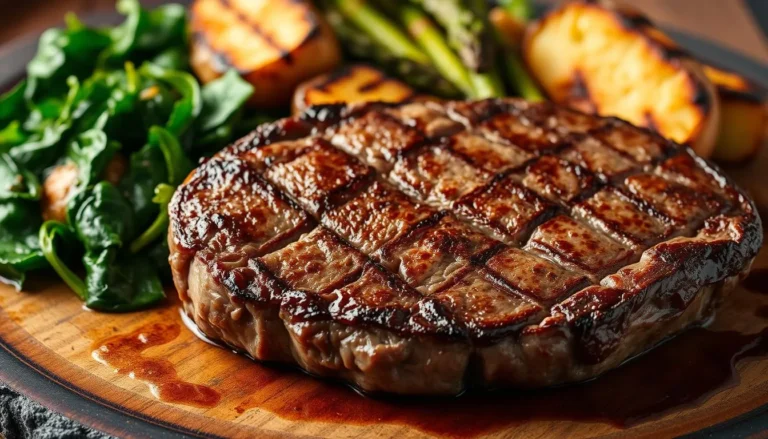
- Beef chuck roast (perfect for slow cooking)
- Lamb shoulder (a classic choice)
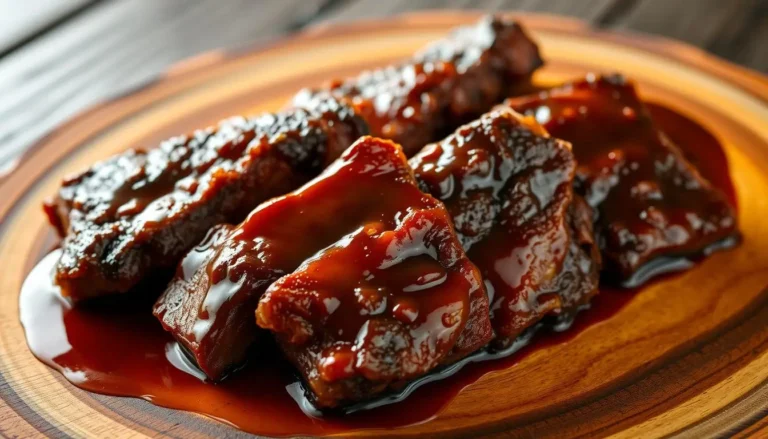
- Boneless short ribs
The meat is the base, but the magic comes from other ingredients. They make the beef tagine recipe special. Your list should include:
- Fresh onions
- Dried fruits like apricots or prunes
- Spices that add aroma, such as:
- Ground cinnamon
- Turmeric
- Ginger
- Cumin
“The secret to an exceptional beef with apricots tagine is balancing sweet and savory elements.” – Moroccan Culinary Experts
Choose ingredients that are fresh and of high quality. Your spices should be freshly ground, and fruits should be juicy and bright. This care makes a simple meal into a memorable one.
Spice Blend and Seasoning Guide
Traditional tagine spices are the heart of Moroccan cuisine. They turn simple ingredients into amazing dishes. The secret to a great beef tagine is its spice blend, which adds deep and complex flavors.
Learning about traditional tagine spices is fascinating. Each spice has its own role in creating the unique taste of Moroccan food. This is what makes Moroccan cuisine so special.
Key Moroccan Spices
The base of authentic tagine seasoning includes key spices:
- Cumin: Earthy and warm
- Paprika: Adds depth and mild heat
- Cinnamon: Provides sweet warmth
- Ginger: Brings subtle spiciness
- Turmeric: Offers golden color and slight bitterness
Creating the Perfect Spice Balance
To get the spice balance right, you need to know how flavors work together. Start with small amounts and add more as needed. The aim is to find a balance that enhances the meat’s flavor without overpowering it.
Saffron and Its Role
Saffron is the star of traditional tagine spices. It adds a luxurious golden color and a delicate floral taste. Use it sparingly, as its strong flavor can take over the dish.
Pro tip: Always buy high-quality, fresh spices from reputable sources to ensure the most authentic flavor profile.
Beef Tagine Recipe: Step-by-Step Instructions
Making an easy beef tagine recipe at home is easier than you think. This recipe will guide you through each step. You’ll end up with a delicious Moroccan-inspired meal that will wow your family and friends.
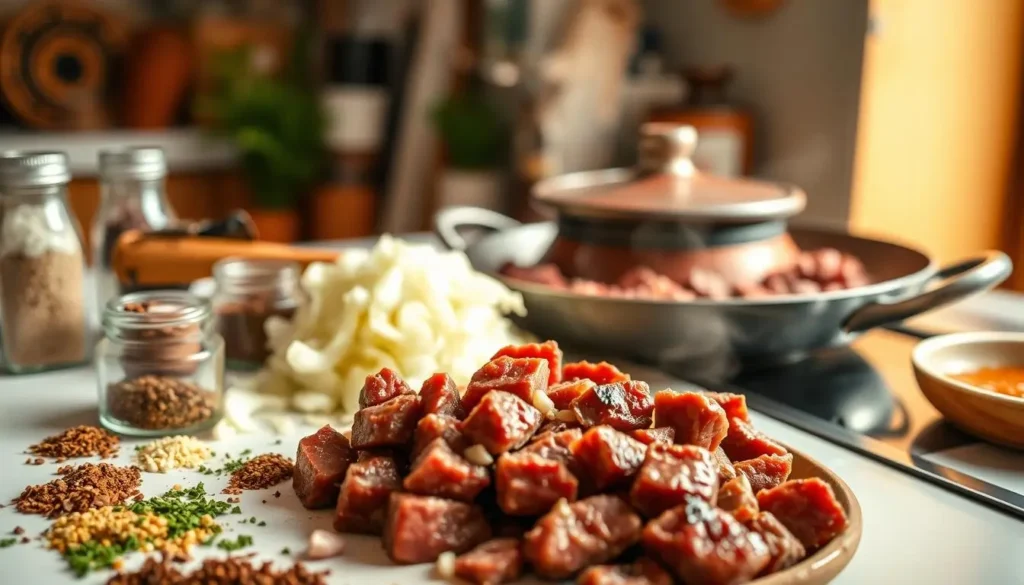
To start your easy beef tagine, gather your ingredients and get your cooking space ready. The secret to a great slow cooked beef tagine is patience and paying close attention to every detail.
- Meat Preparation: Choose high-quality beef chuck or shoulder. Cut it into 1-inch cubes and pat dry with paper towels. This step helps get a perfect golden-brown sear.
- Browning the Meat: Heat olive oil in a heavy-bottomed pot or traditional tagine. Brown the meat in batches. Make sure each piece gets a rich, caramelized exterior.
- Aromatics and Spices: Remove the meat and sauté diced onions until they’re translucent. Add your Moroccan spice blend, including cumin, coriander, and paprika.
- Liquid and Simmering: Put the meat back in the pot. Add beef stock, saffron-infused water, and enough liquid to almost cover the meat. Lower the heat and let it simmer slowly.
- Final Touches: About 30 minutes before serving, add dried prunes for a sweet contrast. This adds depth to your slow cooked beef tagine.
Pro tip: The magic of a great tagine is in low and slow cooking. Let the meat cook for at least 2-3 hours. This makes the meat incredibly tender and the flavors perfect.
The secret to an authentic beef tagine is allowing the meat to cook until it practically falls apart with a gentle touch.
Your easy beef tagine is now ready to be served. The aroma will fill your kitchen with the warm, inviting scents of Moroccan cuisine. It promises a meal that’s both comforting and exotic.
Cooking Techniques and Tips for Perfect Results
Mastering tagine cooking techniques takes patience and knowledge of clay pot cooking. The right approach can turn an ordinary beef tagine into a memorable dish.
Several key techniques are needed for a great tagine. These methods will make your dish authentic and tasty.
Meat Browning Techniques
Proper meat browning is key for deep flavors in your tagine. Here are the essential steps:
- Pat meat dry before browning to ensure a perfect sear
- Use high heat to create a golden-brown crust
- Brown meat in small batches to prevent overcrowding
- Let each piece develop a caramelized exterior
Temperature Control Tips
Clay pot cooking needs precise temperature control. Cooking low and slow is key for tender, flavorful results.
| Cooking Stage | Temperature | Technique |
|---|---|---|
| Initial Browning | High (400°F) | Quick sear for flavor development |
| Slow Cooking | Low (250-300°F) | Gentle simmering for meat tenderness |
| Final Reduction | Medium-Low (325°F) | Thickening sauce and concentrating flavors |
Sauce Consistency Guidelines
A perfect sauce needs attention to detail. Reducing liquid slowly makes it rich and velvety, coating the meat well.
“The secret to an incredible tagine is patience and understanding the subtle art of clay pot cooking.” – Moroccan Culinary Expert
Your goal is a sauce that sticks to the meat but doesn’t dry out. Stir occasionally and watch the liquid level for the perfect consistency.
Alternative Cooking Methods and Equipment
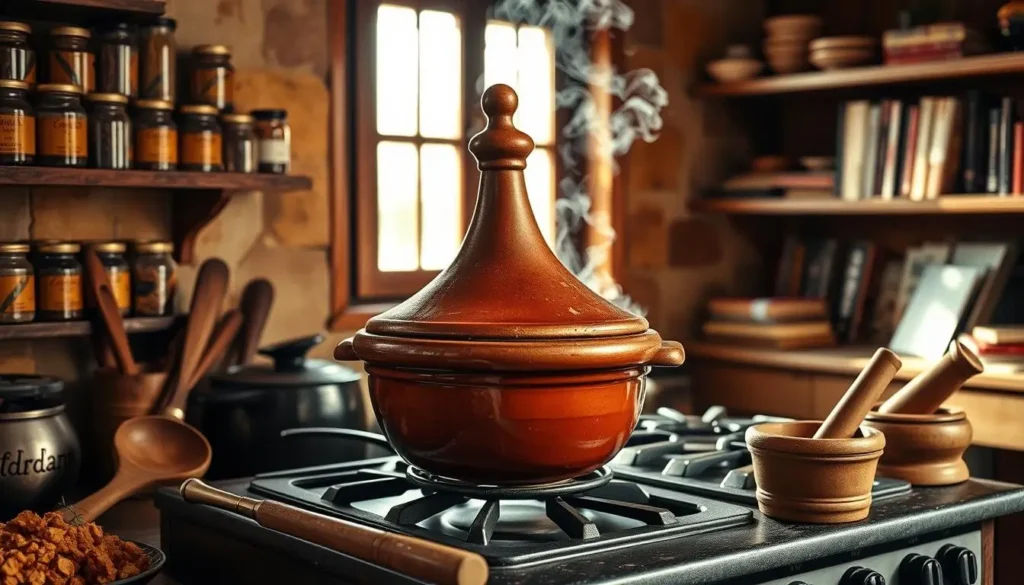
You don’t need a traditional Moroccan tagine pot to make a delicious slow cooked beef tagine. Modern kitchen tools offer great alternatives for a tasty dish.
Here are your main options for making slow cooked beef tagine:
- Slow Cooker (Crockpot)
- Dutch Oven
- Heavy-bottomed Pot with Tight-fitting Lid
Using a slow cooker for beef tagine requires a slight adjustment. It cooks at a steady low heat, perfect for tender meat. Pro tip: Brown your beef before adding it to the slow cooker to enhance flavor development.
A Dutch oven is a great substitute for a traditional tagine. Its heavy cast-iron spreads heat evenly, just like a tagine. Ceramic Dutch ovens are also excellent, mimicking the traditional cooking method.
“The right cooking vessel can transform your beef tagine from good to extraordinary.” – Moroccan Culinary Experts
For the best results, keep temperatures low and cooking times long. This makes the beef tender and the spices rich, just like in authentic Moroccan dishes.
Serving Suggestions and Accompaniments
Your moroccan beef stew deserves a stunning presentation. It should capture the essence of traditional Moroccan dining. The right accompaniments can make your meal go from simple to extraordinary. This creates an authentic culinary experience that delights all senses.
Enhance your moroccan beef stew with these selected side dishes and presentation techniques. They bring vibrant flavors and textures to your table.
Traditional Side Dishes
Pair your moroccan beef stew with these classic accompaniments:
- Fluffy Couscous: The quintessential Moroccan grain that absorbs the rich tagine sauce perfectly
- Warm Flatbreads: Ideal for scooping up every delicious bite
- Light Citrus Salad: Provides a refreshing contrast to the hearty stew
- Preserved Lemons: Add a tangy, traditional Moroccan touch
Presentation Tips
Make your dining experience stunning with these expert serving suggestions:
- Serve in a traditional clay tagine if possible
- Garnish with fresh cilantro or parsley
- Sprinkle toasted almonds or sesame seeds on top
- Use large, warm serving platters to maintain temperature
Your moroccan beef stew will be the highlight of an unforgettable meal. It will transport your guests straight to the vibrant streets of Morocco.
Storage and Reheating Guidelines
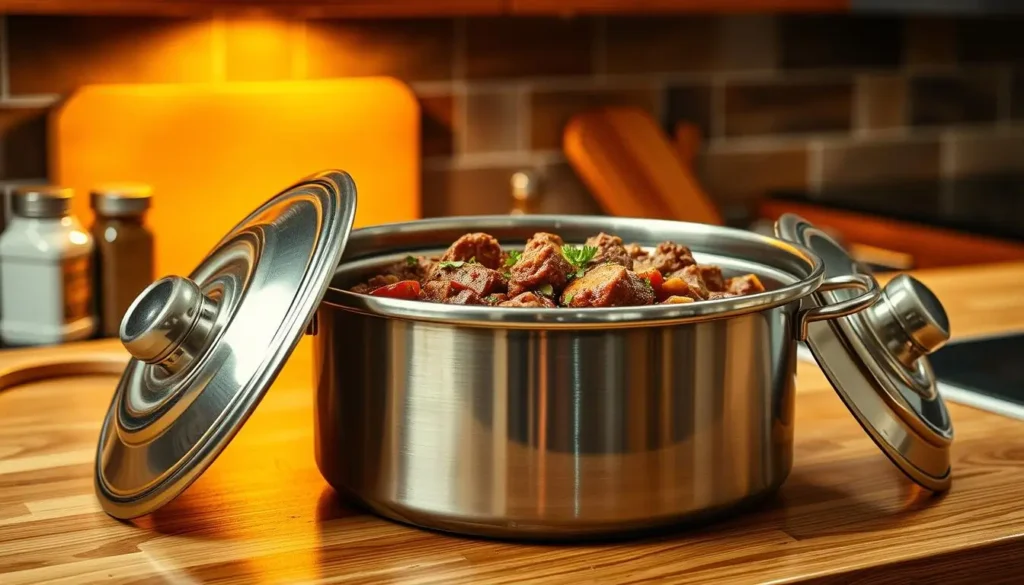
Keeping your beef tagine recipe fresh is key. After you’ve enjoyed it, you’ll want to keep it tasty for later. Proper storage is essential.
Here are the must-know tips for storing your beef tagine:
- Cool the tagine completely before storing
- Use airtight containers to maintain freshness
- Refrigerate within two hours of cooking
Your beef tagine can stay fresh in the fridge for 4 days. If you want to keep it longer, freezing is a great choice. Stored right, it can last in the freezer for up to 4 months.
Reheating your tagine needs care to keep its flavors and meat tender:
- Thaw frozen tagine in the refrigerator overnight
- Reheat slowly in a covered pot on low heat
- Add a small amount of water or broth to prevent drying
- Stir occasionally to ensure even heating
Pro tip: Try to avoid microwaving, as it can make the meat tough and lose flavor. Stovetop reheating is better for keeping the dish’s true taste and texture.
Nutritional Information and Health Benefits
Your tender beef tagine is more than just a tasty meal. It’s a nutritional powerhouse filled with important nutrients. This traditional Moroccan dish has a mix of protein, vitamins, and minerals that boost your health.
The main ingredients in your tender beef tagine are full of nutritional value. Lean beef is a great source of protein, helping your muscles. Prunes add fiber, and almonds bring healthy fats and more protein.
| Nutritional Content | Per Serving |
|---|---|
| Calories | 425 |
| Total Fat | 22g |
| Protein | 35g |
| Carbohydrates | 18g |
| Fiber | 4g |
Key health benefits of your tender beef tagine include:
- Supports muscle growth with high protein content
- Provides essential minerals like iron and zinc
- Offers complex carbohydrates for sustained energy
- Contains antioxidants from spices and dried fruits
Pro tip: For a leaner version, choose grass-fed beef and trim visible fat before cooking. This can help reduce overall calorie and fat intake while maintaining the delicious flavor of your tender beef tagine.
Conclusion
Making an easy beef tagine at home is more than cooking. It’s diving into a rich culinary tradition. This Moroccan beef stew brings together complex flavors, making your cooking more exciting.
The beauty of beef tagine is its flexibility. You can start with a traditional recipe and then make it your own. Try new spice mixes, proteins, or veggies to make it special. It’s all about enjoying the process and the smells.
Mastering beef tagine takes time and practice. Each time you make it, you’ll get better. With patience and care, you can make a meal that rivals a restaurant. Your cooking journey is just starting, and Moroccan cuisine is waiting for you.
Cooking is about connecting with traditions, being creative, and sharing meals with loved ones. Your homemade beef tagine is more than food. It’s a celebration of culture, taste, and the joy of cooking.
Rate & Reviews
⭐ Did you try this Easy Beef Tagine Recipe?
If you made it, leave a rating and share your experience in the comments! Tell us how your beef turned out and what you enjoyed most about the rich, comforting Moroccan-inspired flavors.
🇲🇦 Did you give your tagine a personal touch?
Share the spices, herbs, vegetables, dried fruits, or other ingredients you added. Your tips and variations could inspire other readers to create their own delicious version at home.
❤️ Would you make this beef tagine again?
If it was a hit at your table, share the recipe with friends and family who love hearty Moroccan dishes and easy homemade meals.
🍽️ What Moroccan recipe should we feature next?
Have a favorite beef tagine, lamb tagine, couscous, or another Moroccan classic? Leave your suggestion in the comments and tell us what you’d love to see next!